
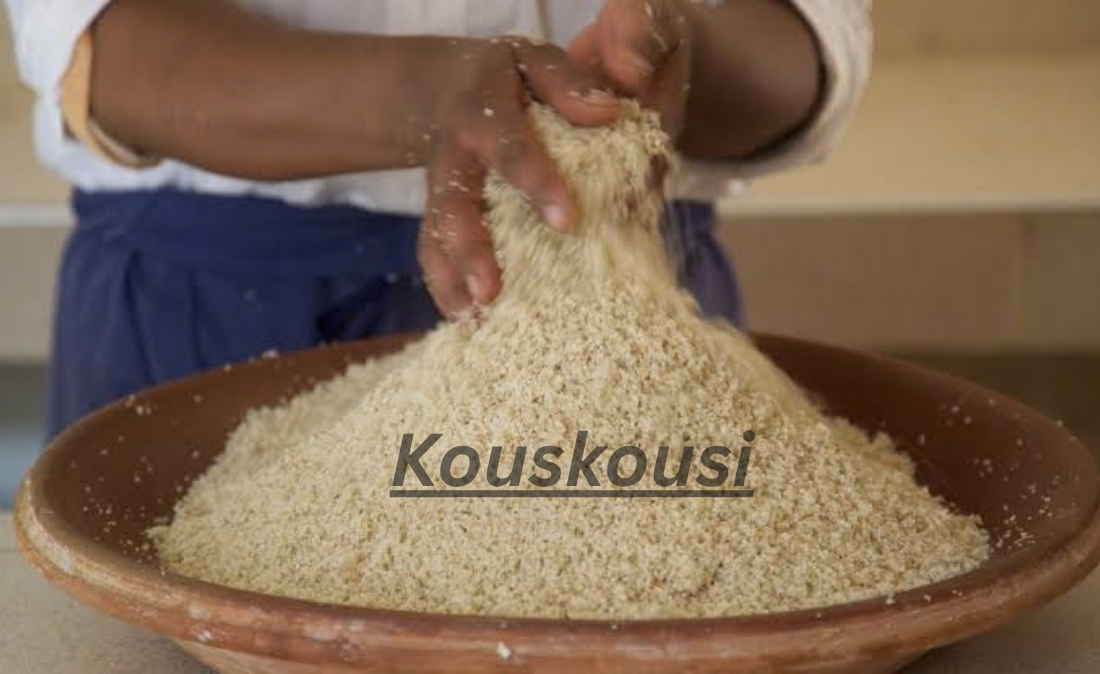

Kouskousi is a food term that has attracted attention because its meaning can vary depending on the language, region, and source where it appears. In many contexts, Kouskousi is used as a spelling or pronunciation associated with couscous, the famous semolina-based food traditionally prepared across North Africa. In other culinary contexts, similar names may describe small pasta products, which can create confusion for people searching for information about the term.
The safest way to understand Kouskousi is to look at the food itself, its ingredients, preparation method, and cultural context rather than relying only on the spelling of the name. Traditional couscous has a long history and an important place in the culinary traditions of Algeria, Mauritania, Morocco, and Tunisia. UNESCO recognized the knowledge and practices associated with the production and consumption of couscous as Intangible Cultural Heritage in 2020.
What Is Kouskousi?
Kouskousi is commonly used online as another spelling or regional rendering connected with couscous. Traditional couscous consists of very small granules made from semolina, generally produced from durum wheat. The granules are prepared so that they remain separate and light after cooking.
Unlike rice, couscous is not a naturally occurring grain. It is a processed wheat product and is more closely related to pasta in terms of its basic ingredients. Traditional preparation involves working semolina into small granules and steaming them.
The word Kouskousi can therefore refer to the familiar couscous food in many contexts, although readers should be aware that the term does not have one universally standardized meaning in every culinary source.
Why the Name Kouskousi Can Be Confusing
One reason for the confusion is that food names often change when they move between languages and regions. Couscous has been prepared across North Africa and has also become popular internationally. As a result, different spellings and pronunciations can appear in English, Arabic, French, Greek, and other languages.
Some contemporary sources use Kouskousi simply as a variant spelling of couscous. Other sources use similar terminology for small pasta products. This means that two products with similar names may not necessarily be identical.
For this reason, it is useful to examine the preparation instructions. If the product consists of tiny semolina granules that are traditionally steamed, it is likely referring to couscous. If it is a small pasta that must be boiled directly in water or broth, it may belong to a different culinary tradition.
Origins of Traditional Couscous
Traditional couscous is strongly associated with the cultures of North Africa. Its history is particularly connected with communities in the Maghreb, including present-day Algeria, Morocco, Tunisia, and Mauritania.
The dish is much more than a simple food. Its preparation includes knowledge about cereal processing, semolina, hand-rolling, steaming, cooking, utensils, and serving traditions. UNESCO describes these practices as a body of knowledge passed between generations.
The organization officially inscribed the knowledge, know-how, and practices associated with the production and consumption of couscous on the Representative List of the Intangible Cultural Heritage of Humanity in 2020. Algeria, Mauritania, Morocco, and Tunisia jointly participated in this heritage recognition.
How Traditional Kouskousi or Couscous Is Made
Traditional couscous production involves several stages. According to UNESCO, the process begins with cereal cultivation. The seeds are then ground to produce semolina.
The semolina is worked and rolled into small granules. Traditionally, this work can be done by hand. The granules are then steamed before being cooked and served.
This process requires experience because the desired result is a collection of small, separate granules rather than one sticky mass. Traditional knowledge is therefore important to achieving the correct texture.
UNESCO notes that the preparation process is associated with specialized tools and utensils. Some traditional utensils are made from clay, while others may be produced from wood. These objects form part of the wider cultural tradition surrounding couscous.
The Traditional Cooking Process
Traditional couscous is commonly steamed rather than simply boiled. The steaming process helps create the light texture associated with properly prepared couscous.
Modern packaged couscous can be different. Many commercially available products are already steamed and dried, meaning that they can be prepared much more quickly at home. Depending on the product, preparation may involve adding hot water or broth and allowing the couscous to absorb the liquid.
Because products vary, following the instructions on the package is important. Traditional handmade couscous and quick-cooking commercial couscous should not automatically be treated as identical products.
Ingredients Commonly Used With Kouskousi
The basic ingredient in traditional couscous is semolina made from wheat. The finished food is relatively mild in flavor, which makes it useful as a base for many different ingredients.
Traditional meals may include:
- Vegetables
- Meat
- Chickpeas
- Broth
- Herbs
- Spices
- Sauces
- Seasonal ingredients
UNESCO specifically notes that couscous may be accompanied by different vegetables and meats according to the region, season, and occasion. This helps explain why there is no single universal couscous recipe.
Regional Variations
One of the most interesting aspects of couscous is its regional diversity. Families and communities may prepare it differently depending on local ingredients, traditions, and occasions.
In one region, couscous may be served with vegetables and a rich broth. In another, it may be paired with meat, legumes, or different combinations of spices.
These variations do not make one version more authentic than another. Instead, they demonstrate how a shared culinary tradition can develop differently across communities.
The cultural tradition recognized by UNESCO covers Algeria, Mauritania, Morocco, and Tunisia, highlighting the shared heritage while acknowledging the knowledge and practices maintained within the participating communities.
Kouskousi and Modern Cooking
Today, couscous is widely available outside North Africa. It can be found in supermarkets, restaurants, specialty food stores, and home kitchens around the world.
Its popularity partly comes from its versatility and relatively simple preparation. Instant or pre-steamed couscous can be prepared quickly, making it suitable for busy households.
It can be served as a side dish, combined with vegetables for a vegetarian meal, mixed into salads, or used as a base for meat and vegetable dishes.
However, modern convenience should not obscure the traditional preparation techniques that gave couscous its cultural significance.
Nutritional Characteristics
Because traditional couscous is made from wheat semolina, it primarily provides carbohydrates. It can also contribute some protein and other nutrients, depending on the specific product.
The nutritional profile of a complete meal depends heavily on what is served with it. Couscous accompanied by vegetables, legumes, and moderate amounts of protein can form part of a balanced meal.
Whole-wheat versions may contain more fiber than refined versions. However, people should always check product labels because nutritional content can differ between brands and varieties.
Couscous is made from wheat, so it contains gluten. People with celiac disease, wheat allergy, or another medically necessary gluten restriction should choose an appropriate alternative rather than assuming that couscous is gluten-free.
How Kouskousi Can Be Served
There are many ways to serve couscous. One of the traditional approaches is to place it beneath or alongside a flavorful stew containing vegetables and meat.
The couscous absorbs some of the flavors from the accompanying broth, creating a satisfying combination of textures and aromas.
It can also be served with:
Vegetable Dishes
Roasted or steamed vegetables can be combined with couscous to create a simple meal. Carrots, zucchini, pumpkin, onions, and other seasonal vegetables work well with its mild flavor.
Meat and Poultry
Chicken, lamb, and other meats can be served with couscous. The meat is often prepared with broth and seasonings so that its flavors complement the semolina.
Legumes
Chickpeas and other legumes can add texture and plant-based protein to a couscous meal.
Salads
Couscous can also be cooled and mixed with vegetables, herbs, and dressings to create a refreshing salad.
Kouskousi as a Cultural Tradition
The cultural importance of couscous extends beyond its ingredients. UNESCO describes the tradition as being connected with solidarity, sharing meals, togetherness, and conviviality.
The preparation of couscous has traditionally involved knowledge passed from one generation to another. People learn by observing family members and participating in the preparation process.
This informal transmission is one reason the dish remains closely connected with family and community life.
Couscous can therefore represent more than food on a plate. It can represent family knowledge, hospitality, cultural identity, and social relationships.
Traditional Tools Used in Preparation
Traditional couscous preparation can involve specialized utensils. UNESCO notes that these tools are themselves part of the cultural practices surrounding the dish.
Clay utensils may be made by potters, while wooden utensils can be produced by cooperatives, artisans, or family businesses.
This demonstrates that couscous culture extends beyond farming and cooking. It can also involve craftsmanship and the production of objects used during preparation and serving.
Kouskousi Versus Other Small Pasta Foods
The similar appearance of different foods can cause confusion. Couscous consists of small semolina granules and is traditionally steamed.
Some Mediterranean and Greek foods have similar small, rounded or grain-like shapes but may technically be pasta and may be cooked by boiling.
Therefore, the name alone is not always enough to identify a food accurately. Checking the ingredients, origin, packaging, and cooking instructions is the best approach when purchasing an unfamiliar product called Kouskousi.
Common Misunderstandings About Kouskousi
One common misunderstanding is that couscous is a type of grain. It is not a grain like rice or wheat berries. It is made by processing wheat semolina into small granules.
Another misconception is that every couscous product is prepared in exactly the same way. Traditional handmade couscous can require considerably more preparation than modern instant products.
A third misunderstanding comes from the spelling Kouskousi itself. The term can be used differently by different sources, so it is better to examine the culinary context instead of assuming that every reference describes exactly the same product.
Why Kouskousi Remains Popular
Couscous has survived and expanded beyond its traditional regions because it is adaptable. It can accompany many foods and can be adjusted according to available ingredients.
Its mild flavor also allows spices, vegetables, meat, herbs, and sauces to become the central flavors of a meal.
At the same time, the traditional knowledge surrounding couscous continues to give the food a deeper cultural significance. UNESCO’s recognition demonstrates that the tradition is valued not only as cuisine but also as living cultural heritage.
The Global Appeal of Couscous
Couscous is now familiar in many parts of the world. International interest has introduced the food to people who may never have encountered traditional North African cuisine before.
Restaurants may present couscous alongside modern ingredients, while home cooks may use it in salads, vegetable dishes, and quick weekday meals.
Although modern recipes can be creative, the traditional foundation remains important. Understanding the history and cultural background of couscous allows people to appreciate it as more than a convenient ingredient.
How to Identify Kouskousi Correctly
If you encounter the word Kouskousi, consider the following questions:
- What ingredients are listed?
- Is the product made from durum wheat semolina?
- Does the package recommend steaming or soaking?
- Does it need to be boiled like pasta?
- What country or culinary tradition does the product come from?
These clues can help determine whether the term is being used to describe traditional couscous or a similarly named small pasta product.
Conclusion
Kouskousi is an interesting food term because its meaning can vary across sources. In many contexts, it is associated with couscous, the traditional North African semolina food. Couscous has deep cultural roots and is especially associated with Algeria, Mauritania, Morocco, and Tunisia.
Its traditional preparation involves transforming cereal into semolina, rolling the semolina into small granules, steaming them, and serving them with ingredients such as vegetables, meat, and broth. The knowledge involved in producing and consuming couscous was recognized by UNESCO as Intangible Cultural Heritage in 2020.
At the same time, readers should be aware that similar names can refer to small pasta products in other culinary contexts. Therefore, the ingredients and cooking method are important when identifying a product called Kouskousi.
Whether encountered as Kouskousi or couscous, the food represents an important culinary tradition with a remarkable combination of history, craftsmanship, family knowledge, and shared meals.
Frequently Asked Questions
1. What is Kouskousi?
Kouskousi is a term that is commonly used in connection with couscous, the traditional semolina-based food associated with North African cuisine. However, similar terminology can also refer to small pasta products in some culinary contexts, so the exact meaning depends on the source and region.
2. Is Kouskousi the same as couscous?
In many sources, Kouskousi is used as a spelling or regional form of couscous. However, the term is not completely standardized online. Some sources use similar names for small pasta products, so checking the ingredients and cooking instructions is recommended.
3. Where does traditional couscous come from?
Traditional couscous is strongly associated with North Africa, particularly Algeria, Mauritania, Morocco, and Tunisia. UNESCO recognizes the knowledge and practices related to its production and consumption as Intangible Cultural Heritage.
4. How is traditional couscous prepared?
Traditional couscous is made from semolina that is worked into small granules and steamed before being cooked and served. The preparation can involve specialized utensils and considerable traditional knowledge. Modern packaged couscous may already be steamed and dried and therefore requires much less preparation.
5. Is Kouskousi gluten-free?
Traditional couscous is made from wheat semolina and therefore contains gluten. Anyone who needs to avoid gluten because of celiac disease, wheat allergy, or another medical reason should check the ingredients carefully and choose a suitable gluten-free alternative.